publications
publications by categories in reversed chronological order. generated by jekyll-scholar.
2026
- unlearning
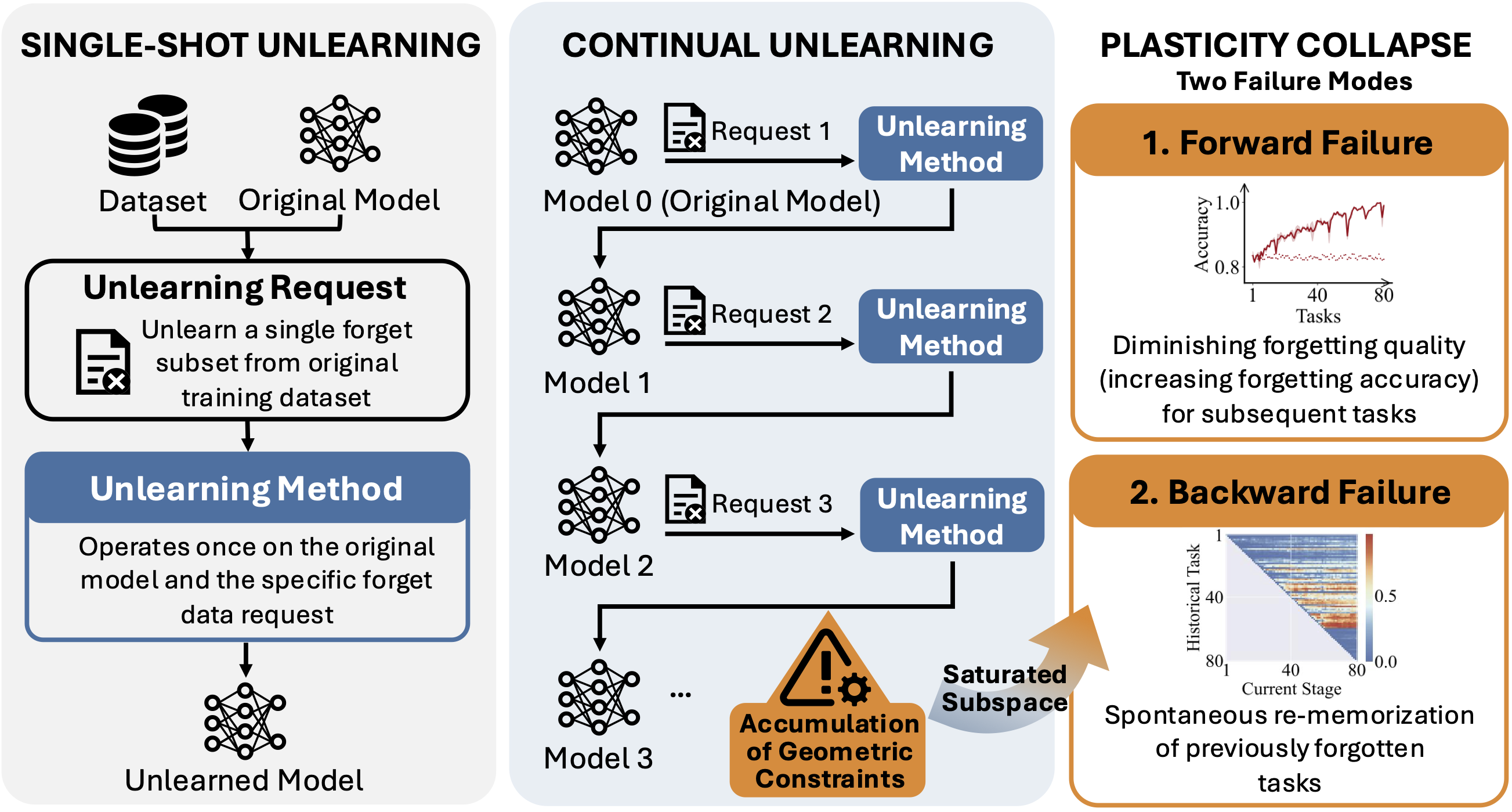 On the Plasticity Collapse in Continual Machine UnlearningYingdan Shi, Xiang Xu, Kaize Ding, Alfred O. Hero, and Ren WangECCV, 2026
Machine unlearning enables deep neural networks to selectively remove the influence of specific data in response to privacy and regulatory requirements. While prior work largely studies single-shot unlearning, real-world systems must accommodate continual unlearning, where multiple unlearning requests occur sequentially over time. In this work, we identify a fundamental limitation of this setting: plasticity collapse, a progressive breakdown in a model’s ability to effectively forget. Through theoretical analysis of continual unlearning dynamics, we show that continual unlearning operations accumulate geometric constraints in parameter space, leading to saturated subspaces that restrict future updates. This structural effect induces two distinct failure modes: (1) Forward failure – diminishing forgetting quality for subsequent tasks, and (2) Backward failure – spontaneous re-memorization of previously forgotten information. Extensive experiments across multiple architectures, datasets, and methods in image classification confirm that plasticity collapse is not an artifact of specific implementations, but a pervasive phenomenon inherent to continual unlearning. Our findings reveal a critical barrier to the long-term reliability of machine unlearning systems and motivate the development of plasticity-preserving unlearning algorithms.
@article{PCU, title = {On the Plasticity Collapse in Continual Machine Unlearning}, author = {Shi, Yingdan and Xu, Xiang and Ding, Kaize and Hero, Alfred O. and Wang, Ren}, journal = {ECCV}, year = {2026}, } - unlearning
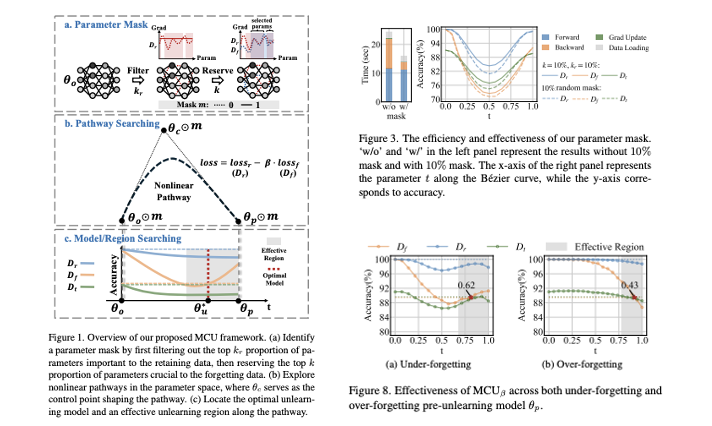 Exploring Nonlinear Pathway in Parameter Space for Machine UnlearningYingdan Shi, and Ren WangICML, 2026
Machine Unlearning (MU) aims to remove the information of specific training data from a trained model, ensuring compliance with privacy regulations and user requests. While one line of existing MU methods relies on linear parameter updates via task arithmetic, they suffer from weight entanglement. In this work, we propose a novel MU framework called Mode Connectivity Unlearning (MCU) that leverages mode connectivity to find an unlearning pathway in a nonlinear manner. To further enhance performance and efficiency, we introduce a parameter mask strategy that not only improves unlearning effectiveness but also reduces computational overhead. Moreover, we propose an adaptive adjustment strategy for our unlearning penalty coefficient to adaptively balance forgetting quality and predictive performance during training, eliminating the need for empirical hyperparameter tuning. Unlike traditional MU methods that identify only a single unlearning model, MCU uncovers a spectrum of unlearning models along the pathway. Overall, MCU serves as a plug-and-play framework that seamlessly integrates with any existing MU methods, consistently improving unlearning efficacy. Extensive experiments on the image classification task demonstrate that MCU achieves superior performance.
@article{MCU, title = {Exploring Nonlinear Pathway in Parameter Space for Machine Unlearning}, author = {Shi, Yingdan and Wang, Ren}, journal = {ICML}, year = {2026}, } - unlearning
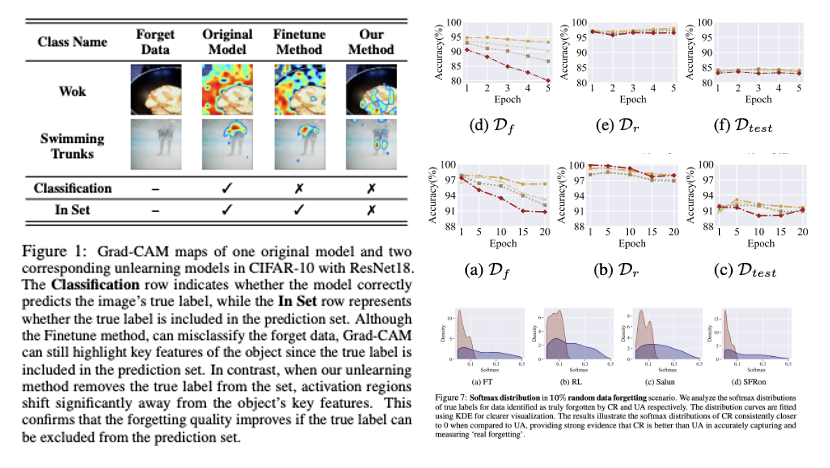 Tackling Fake Forgetting through Uncertainty QuantificationYingdan Shi, Sijia Liu, and Ren WangICML, 2026
Machine unlearning seeks to remove the influence of specified data from a trained model. While metrics such as unlearning accuracy (UA) and membership inference attack (MIA) provide baselines for assessing unlearning performance, they fall short of evaluating the forgetting reliability. In this paper, we find that the data misclassified across UA and MIA still have their ground truth labels included in the prediction set from the uncertainty quantification perspective, which raises a fake unlearning issue. To address this issue, we propose two novel metrics inspired by conformal prediction that more reliably evaluate forgetting quality. Building on these insights, we further propose a conformal prediction-based unlearning framework that integrates conformal prediction into Carlini & Wagner adversarial attack loss, which can significantly push the ground truth label out of the conformal prediction set. Through extensive experiments on image classification task, we demonstrate both the effectiveness of our proposed metrics and the superiority of our unlearning framework, which improves the UA of existing unlearning methods by an average of 6.6% through the incorporation of a tailored loss term alone.
@article{MUCP, title = {Tackling Fake Forgetting through Uncertainty Quantification}, author = {Shi, Yingdan and Liu, Sijia and Wang, Ren}, journal = {ICML}, year = {2026}, } - watermarking
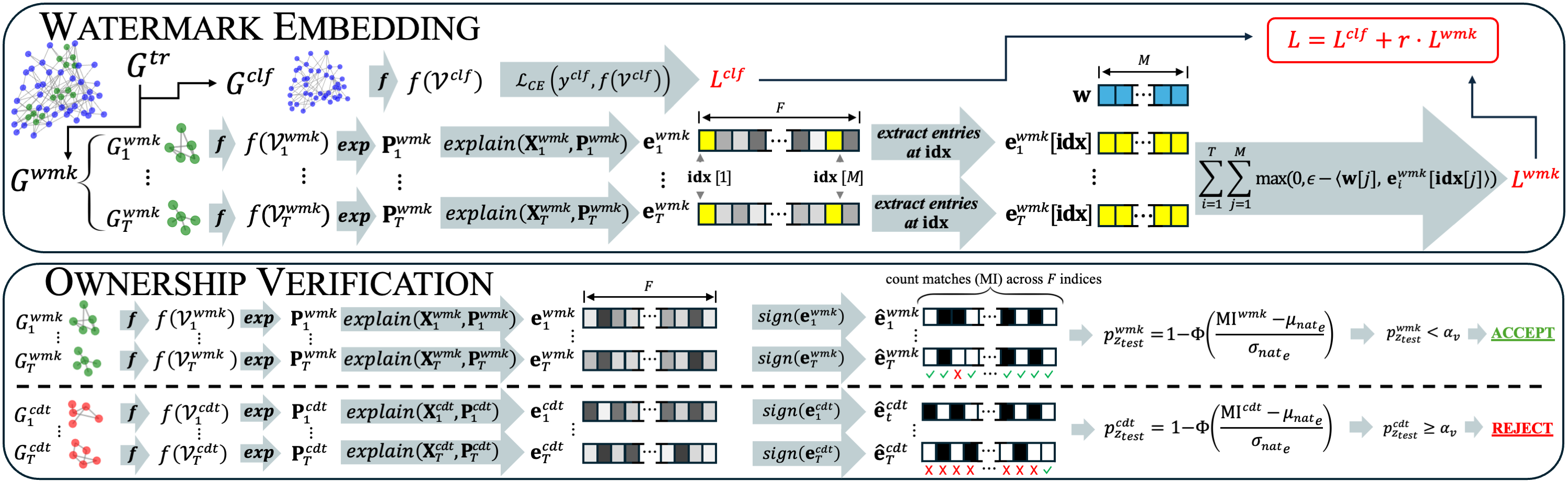 Watermarking Graph Neural Networks via Explanations for Ownership ProtectionJane Downer, Yingdan Shi, Ziyan Liu, Ren Wang, and Binghui WangICML, 2026
Graph Neural Networks (GNNs) are widely deployed in industry, making their intellectual property valuable. However, protecting GNNs from unauthorized use remains a challenge. Watermarking offers a solution by embedding ownership information into models. Existing watermarking methods have two limitations: First, they rarely focus on graph data or GNNs. Second, the de facto backdoor-based method relies on manipulating training data, which can introduce ownership ambiguity through misclassification and vulnerability to data poisoning attacks that can interrupt the backdoor mechanism. Our explanation-based watermarking inherits the strengths of backdoor-based methods (e.g., black-box verification) without data manipulation, eliminating ownership ambiguity and data dependencies. In particular, we watermark GNN explanations such that these explanations are statistically distinct from others, so ownership claims must be verified through statistical significance. We theoretically prove that, even with full knowledge of our method, locating the watermark is NP-hard. Empirically, our method demonstrates robustness to fine-tuning and pruning attacks. By addressing these challenges, our approach significantly advances GNN intellectual property protection.
@article{watermarking,
  title = {Watermarking Graph Neural Networks via Explanations for Ownership Protection},
  author = {Downer, Jane and Shi, Yingdan and Liu, Ziyan and Wang, Ren and Wang, Binghui},
  journal = {ICML},
  year = {2026},
}


2025
- social network
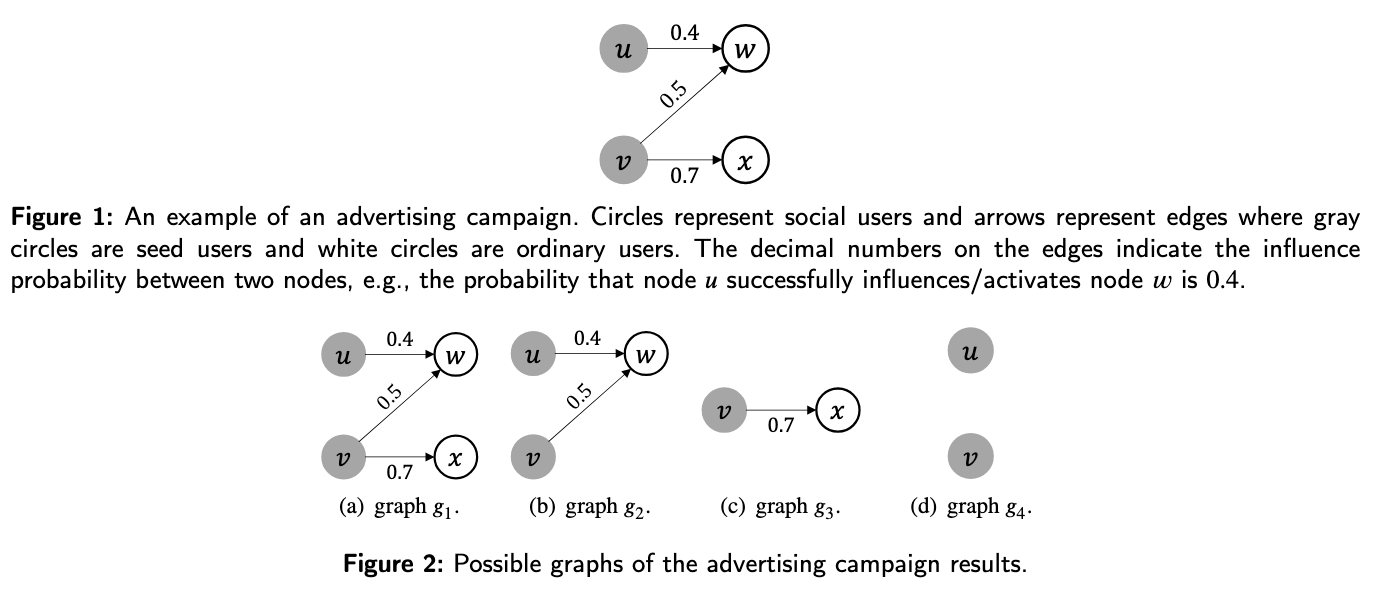 Influence Contribution Ratio Estimation in Social NetworksYingdan Shi, Jingya Zhou, Congcong Zhang, and Zhenyu HuInformation Sciences, 2025
@article{INS_2025, title = {Influence Contribution Ratio Estimation in Social Networks}, journal = {Information Sciences}, volume = {689}, pages = {121934}, year = {2025}, issn = {0020-0255}, doi = {https://doi.org/10.1016/j.ins.2025.121934}, url = {https://www.sciencedirect.com/science/article/pii/S0020025525000660}, author = {Shi, Yingdan and Zhou, Jingya and Zhang, Congcong and Hu, Zhenyu}, keywords = {Influence estimation, social networks, influence contribution ratio, influence maximization}, } - social network
 Order-sensitive competitive revenue maximization for viral marketing in social networksCongcong Zhang, Jingya Zhou, Wenqi Wei, and Yingdan ShiInformation Sciences, 2025
@article{INF_2025, title = {Order-sensitive competitive revenue maximization for viral marketing in social networks}, journal = {Information Sciences}, volume = {689}, pages = {121474}, year = {2025}, issn = {0020-0255}, doi = {https://doi.org/10.1016/j.ins.2024.121474}, url = {https://www.sciencedirect.com/science/article/pii/S0020025524013884}, author = {Zhang, Congcong and Zhou, Jingya and Wei, Wenqi and Shi, Yingdan}, keywords = {Viral marketing, Competitive influence maximization, Competitive revenue maximization, Order-sensitive, Influence diffusion}, }


2024
- social network
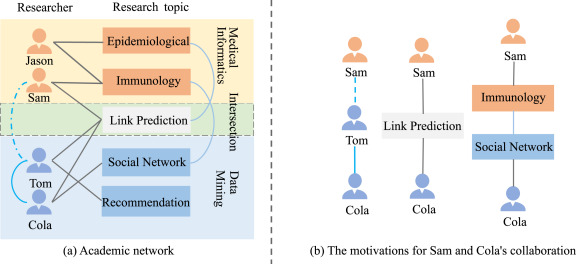 Predicting cross-domain collaboration using multi-task learningZhenyu Hu, Jingya Zhou, Wenqi Wei, Congcong Zhang, and Yingdan ShiExpert Systems with Applications, 2024
@article{ESWA_2024, title = {Predicting cross-domain collaboration using multi-task learning}, journal = {Expert Systems with Applications}, volume = {255}, pages = {124570}, year = {2024}, issn = {0957-4174}, doi = {https://doi.org/10.1016/j.eswa.2024.124570}, url = {https://www.sciencedirect.com/science/article/pii/S0957417424014374}, author = {Hu, Zhenyu and Zhou, Jingya and Wei, Wenqi and Zhang, Congcong and Shi, Yingdan}, keywords = {Collaboration prediction, Cross-domain collaboration, Graph representation learning, Multi-task learning}, } - social network
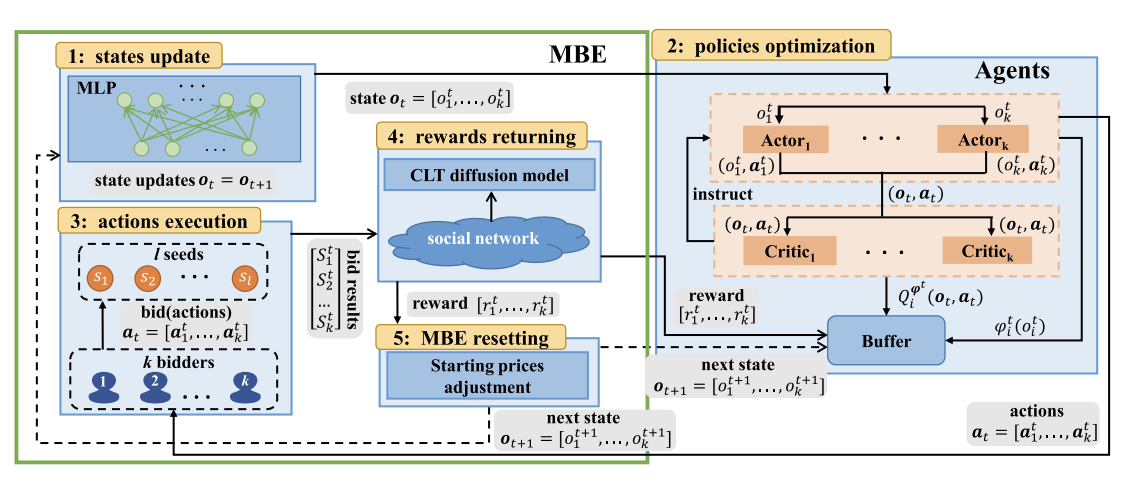 Fairness-Aware Competitive Bidding Influence Maximization in Social NetworksCongcong Zhang, Jingya Zhou, Jin Wang, Jianxi Fan, and Yingdan ShiIEEE Transactions on Computational Social Systems, 2024
@article{TCSS_2024, author = {Zhang, Congcong and Zhou, Jingya and Wang, Jin and Fan, Jianxi and Shi, Yingdan}, journal = {IEEE Transactions on Computational Social Systems}, title = {Fairness-Aware Competitive Bidding Influence Maximization in Social Networks}, year = {2024}, volume = {11}, number = {2}, pages = {2147-2159}, keywords = {Social networking (online);Resource management;Companies;Blogs;Task analysis;Costs;Reinforcement learning;Competitive bidding influence maximization (CBIM);fairness;influence diffusion;multiagent reinforcement learning (MARL);social networks}, doi = {10.1109/TCSS.2023.3285605}, } - social network
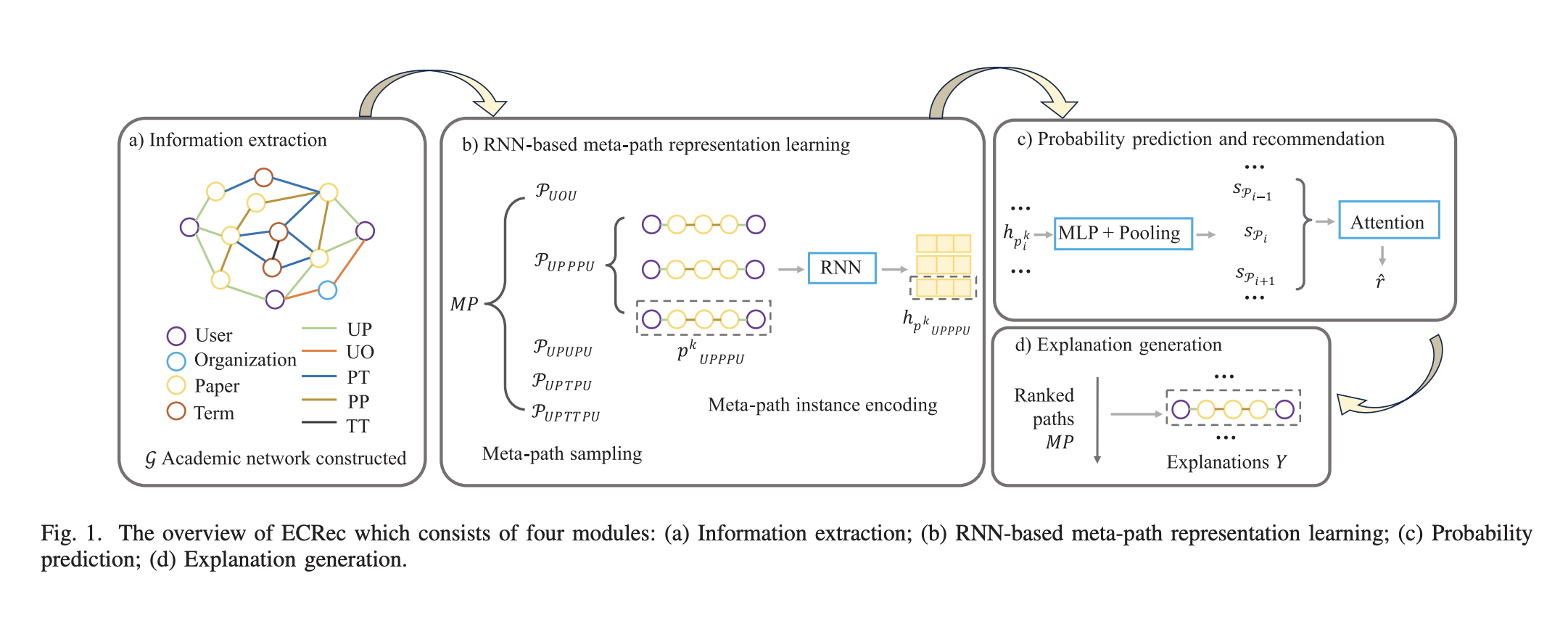 Explainable Cross-Domain Collaborator RecommendationZhenyu Hu, Jingya Zhou, Congcong Zhang, and Yingdan ShiIn 2024 27th International Conference on Computer Supported Cooperative Work in Design (CSCWD), 2024
@inproceedings{CSCWD_2024, author = {Hu, Zhenyu and Zhou, Jingya and Zhang, Congcong and Shi, Yingdan}, booktitle = {2024 27th International Conference on Computer Supported Cooperative Work in Design (CSCWD)}, title = {Explainable Cross-Domain Collaborator Recommendation}, year = {2024}, volume = {}, number = {}, pages = {3224-3229}, keywords = {Representation learning;Attention mechanisms;Social networking (online);Federated learning;Semantics;Collaboration;Cognition;Cross-domain collaboration;collaborator recommendation;explainable recommendation}, doi = {10.1109/CSCWD61410.2024.10580356}, }


2023
- social network
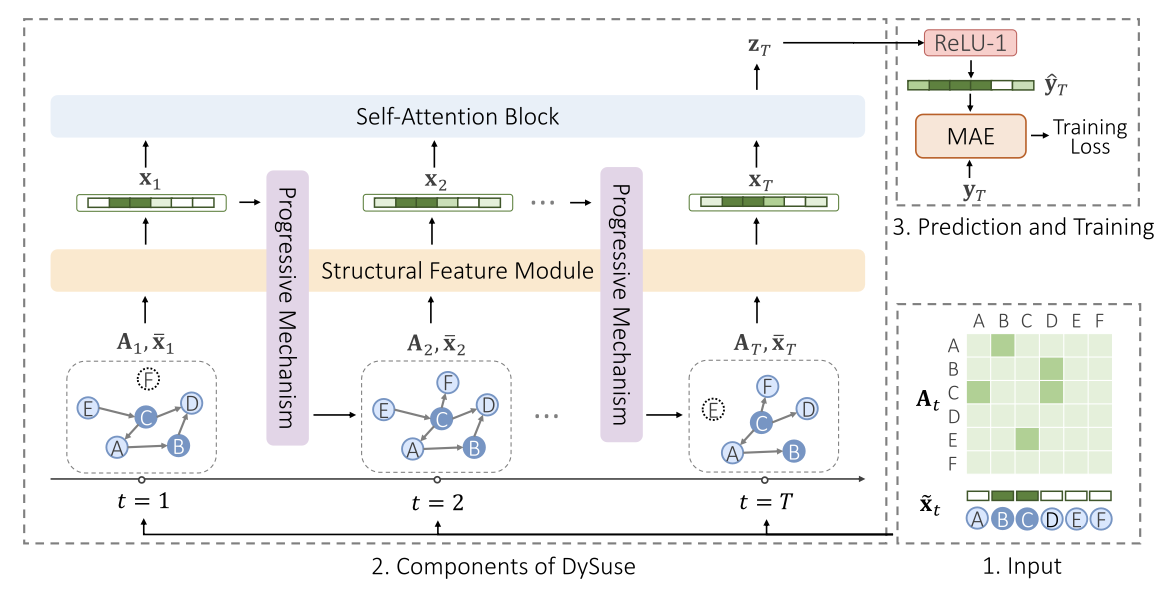 DySuse: Susceptibility estimation in dynamic social networksYingdan Shi, Jingya Zhou, and Congcong ZhangExpert Systems with Applications, 2023
@article{ESWA_2023, title = {DySuse: Susceptibility estimation in dynamic social networks}, journal = {Expert Systems with Applications}, volume = {234}, pages = {121042}, year = {2023}, issn = {0957-4174}, doi = {https://doi.org/10.1016/j.eswa.2023.121042}, url = {https://www.sciencedirect.com/science/article/pii/S0957417423015440}, author = {Shi, Yingdan and Zhou, Jingya and Zhang, Congcong}, keywords = {Susceptibility estimation, Dynamic social networks, Influence diffusion, Progressive mechanism}, }
